Showing posts with label Wet Process. Show all posts

Vendor Enlistment SOP or Flowchart For Vendor Enlistment


Vendor Enlistment SOP                                                             


Vendor or New supplier are want to supply some products other company at first ensure that vendor or new supplier name has create buyer's company ERP system. Than new vendor are easily supply any products. How much steps to create new vendor name, this is discus below:

Vendor Enlistment SOP or Flowchart For Vendor Enlistment
Vendor Enlistment

Vendor Enlistment SOP or Flowchart For Vendor Enlistment

1. Supplier contact with SCM/ SCM contact with supplier
2. Sent the e-mail along with enlistment form
3. Vendor provide the filled up form along necessary documents
4. Sent the Filled to audit
 5. Back to SCM
 
6. Approved Top management
7. Sent The Photocopy of approval page to ERP
8. Create Supplier Name in ERP System


Responsible Person/Team


Which is the responsible person for every steps, this is discus below:
  1. Dyeing, SCM, Lab, Supplier
  2. SCM
  3. Dyeing, SCM
  4. Dyeing
  5. SCM
  6. SCM, Dyeing
  7. Dyeing
  8. Accounts & Finance
  9. SCM
  10. SCM

So, Every responsible person has complete every process than create vendor or new supplier name to buyer's company. 

Top Dyes and Chemicals Suppliers In the world


Chemical

Chemical is the helping materials in dyeing. Dyeing and printing a ration is maintained between water and chemicals. Many chemicals have dangerous side effect to the environment in this case they are trying to minimize the bad affect of chemicals to the environment.

Top Dyes and Chemicals Suppliers In the world
Dyes & Chemicals

Top Chemical Manufacturing Companies of the World: Chemical business takes a huge place. Billion and billion dollar trade is done by this chemical trade. Different chemical manufacturing companies are manufacturing chemicals with the competition with other chemical manufacturers.

Top list of chemical suppliers in the world

  • BASF
  • Sinopec
  • Dow Chemicals
  • Mitsui chemicals
  • The linde group
  • Sumitomo chemical
  • Reliance industries
  • Evonik industry
  • Toray industry
  • Lotte chemical
  • Yara international
  • Sabic
  • Royal Dutch Shell
  • Exxonmobi
  • Formosa Plastics
  • Dupont
  • Ineos
  • Mitsubishi
  • Bayer
  • Lg chem
  • Akzonobel
  • Air liquid
  • Braskem
  • Ppg industry
  • Solvay
  • Chevron ohillips chemicals
  • Dsm
  • Shin-Etsu chemical
  • Dic
  • Total
  • Indorama ventures
  • Eni
  • Potashcorp
  • Alpek
  • Praxair
  • Sk innovation
  • Asahi kasei
  • Huntsman
  • Laxness
  • Borealis
  • Syngenta
  • Mosalic
  • Ptt global chemical
  • Eastman chemicals
  • Arkema
  • Tosoh
  • Styrolution


List of chemicals used in textile industry | Different Types of Chemical is used for Fabric dyeing


Chemical

Chemical are second important material for dyeing knit fabric. Chemical are mixed in dyeing machine with the dyes. Use of chemicals depends on the dyes type. Some chemical is strong alkaline some are weak and some are moderate in nature.

List of chemicals used in textile industry | Different Types of Chemical is used for Fabric dyeing
Dyes & Chemicals

List of chemicals used in textile industry

Basic chemicals:
  • Soda ash
  • Hydrochloric
  • Hydrogen peroxide
  • Sulfuric acid
  • Formic acid
  • Caustic soda
  • Acetic acid
  • Sodium Hypo Chloride

Bleaching Agent
  • Hydrogen peroxide 50%

Salt
  • Glubar salt
  • Common salt
  • Caustic soda
  • Caustic soda pear

Detergent or Scouring Agent
  • Jintex-GD
  • Felosan RGN
  • Jintex-GS
  • Invadine DA
  • Invatex CS
  • Cibafluid C

Washing agent or soaping agent
  • Serafast CRD
  • Kappatex R98
  • Crosden LPD
  • Resotex WOP
  • Diypol XLF
  • Jintex WRN

Leveling Agent
  • Levelinx-p
  • Jinleve leve-RSPL
  • Serabid MIP
  • Dyapol XLF
  • Lubovin RG BD
  • Baso winch PEL
  • Osimol rol
  • Uniperol EL
  • Prote Gal DP505

Sequestering Agent
  • Ladqueast 1097
  • Dekol SM
  • Sirrix Ak liq
  • Resotext 600S
  • Heptol EMG
  • Heptol DBL

Whitenting Agent
  • Uvitex2B
  • Uvitex BHV
  • Bluton BBV
  • Tuboblanc col
  • Uvitex BAM
  • Synowhite
  • Hostalux ETBN

Fixing Agent
  • Sandofix EC
  • Tinofix ECO
  • Protefix DPE 568
  • Jinfix SR
  • Optifix EC
  • Cibafix ECO
  • Cycianon E

Softener
  • Cetasaft CS
  • resomine supper
  • Acelon 
  • Resosoft-XCL
  • Silicon

Sequestering Agent
  • Ladiqueast 1097
  • Dekol SM
  • Sirrix AK liq

Peroxide Killer
  • Invatx PC
  • Lorinol PK
  • Basopal PK

Reactive Fixing Agent
  • Cibafix Eco
  • Tinofix FRD
  • Cycianon E

Mercerizing Wetting Agent
  • Mercerol QWLF
  • LEophen MC

After Soaping Agent
  • Cibapor R liq
  • Sandopour RSK
  • Geiclean Aw

Enzyme Finishing Agent
  • Bio polish Al

Optical Brightener For cotton
  • Uvitex BBT
  • Uvitex CIDN
  • Uvitex BHV


Optical Brightener For cotton
  • Ultraphore BN liq
  • Uvitex BHT
  • Ultraphore SFG
  • Ultraphore SFR


Decolourant for Effluent treatment
  • Colfloc RD


Above chemical manufactured by different chemical manufacturer.
So, Apply one in knit dyeing process.


Organogram Of Dyeing Factory | Dyeing Factory Organogram


Organogram of Dyeing Factory

Every Company have their own managerial system which control the whole process. Organogram maintain this managerial system step by step. Now we can express the organogram means a drawing plan that gives the names and job title of all the staff of organization. Organogram learnt connect to each other staff.

Dyeing Factory Organogram

Organogram of Dyeing Factory

Chairman
Managing Director
Executive Director
Director (Production/Finance)
General Manager (GM)
Deputy General Manager (DGM)
Assistant General Manager (AGM)
Manager
Assistant Manager
Senior Production Officer
Production Officer
Assistant Production Officer
Dyeing Master
Shift In-charge
Floor In-charge
Supervisor
Operator
Helper

Different Types Of Dyes in Relation It The Fibre Substrate

DyeStuff

Dyestuffs are organic and inorganic substances which consists of chromophore groups, can change the physical and chemical properties of any substance can absorb light and reflect lights to show color. They are unsaturated complex compound.

Different Types Of Dyes

Characteristics of dyestuff

It must contain chromophore group
Chromophore group can be different types like –NO2,-NH2,-CO2,-N=O
It must make dilute solution when it mixed with H2O nut it can also insoluble too.
Dyestuff must penetrate into the fiber
It must have stability and fastness property

Different types of Dyestuffs in relation between the fiber substrate:

Reactive Dye: Applicable for cotton, linen, viscose,, wool, silk. The dyestuff forms a chemical link with the fiber. It has very good fastness properties.

Disperse Dye: Applicable for polyester, nylon, acetate. It is water in soluble applies from dispersions diffuse into the fiber at high temperature. It has also good fastness.

Basic dye; it is suitable for acrlylic fibres. It reacts with acidic groups or mordants in the fiber. It is also good fastness properties on acrylic fibers.

Direct dye: Applicable for cotton, linen, viscose, silk. Simple diffusion into the fibre, from aqueous solution. It has relatively poor fastness properties to light, washing and perspiration. These fastness properties can be improved by after treatment.

Vat dye: Applicable for cotton, linen, viscose. These insoluble dyestuff is made soluble in a reducing vat so that it can diffuse into the fibre. After diffusion is complete, it is then re-oxidised into it’s in soluble from. High fastness to washing, chlorine, boiling, light, rubbing and perspiration.

Acid dye: Applicable for wool, silk, nylon. Applied from an acidic dyebath. The fastness properties of this dye-stufff depends on the fibre types.

Working Process For Re-dyeing or Shade Dyeing process

Re-dyeing or Shade Dyeing process

Re-dyeing process is when sample is not fully match with the approved shade then only for testing this process for match with the approved shade. This is called Re-dyeing process.

Re-Dyeing Or Shade Matching
Re-Dyeing Or Shade Matching 

Working process for re-dyeing or shade dyeing process

Cut the dyeing sample
Then take 10liter water
The add 5 gm dyes in this water at temp.70 c
After that stirring very well for 10 min
Then take out the fabric from the bath
Then at 60 c temp: with 2 liter of water the hot wash and clod wash is done
Then the fabric is dried and observed the dyed sample with approved shade

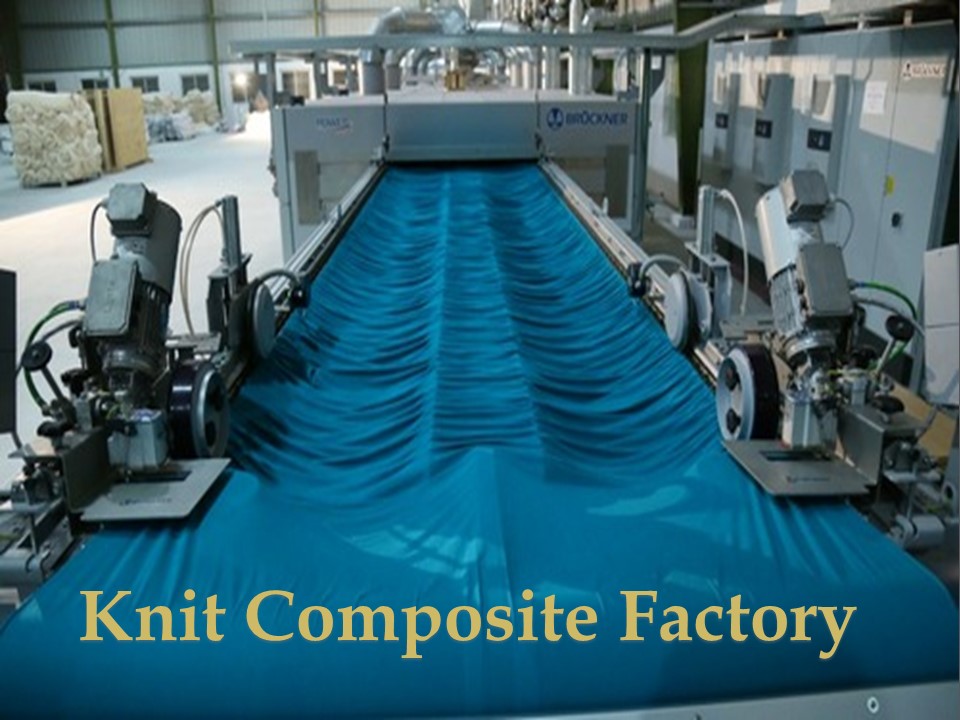
Working Flowchart for Knit Composite Factory


Knit Composite Factory

In every composite Factory have dyeing, knitting, finishing, garment manufacturing, garment washing units. Its production quantity is huge. Now we will flowchart for knit composite factory.


Knit Composite Factory

Working flowchart for knit composite factory

Yarn dyeing
QA Inspection
Knitting
QA Inspection
Knit Dyeing
Fabric Finishing
QA Inspection
Cutting
QA Inspection
Printing
QA Inspection
Sewing
QA Inspection
Garments Wash
Garments Finishing
QA Inspection
Packing
Final Inspection
Shipment

Dyeing Development Process | SOP For Dyeing Development


development of dyeing
Different Types of Shade 


 SOP for Development  (Dyeing)

1. Contact with supplier for Development / Supplier's proposal through for mail


2. Arrange the meeting with supplier


3. Discus with the management along production HOD


4. Fixed date & time for trail


5. Inform Supplier over chain mail about date & time


                                 6. Trail done by vendor in presence                                                of SCM & production
                             ↓
7. Trail report making production


8. Cost analysis by Accounts & Finance
 
9. Make file of with check list


10. Taking approval from Management